
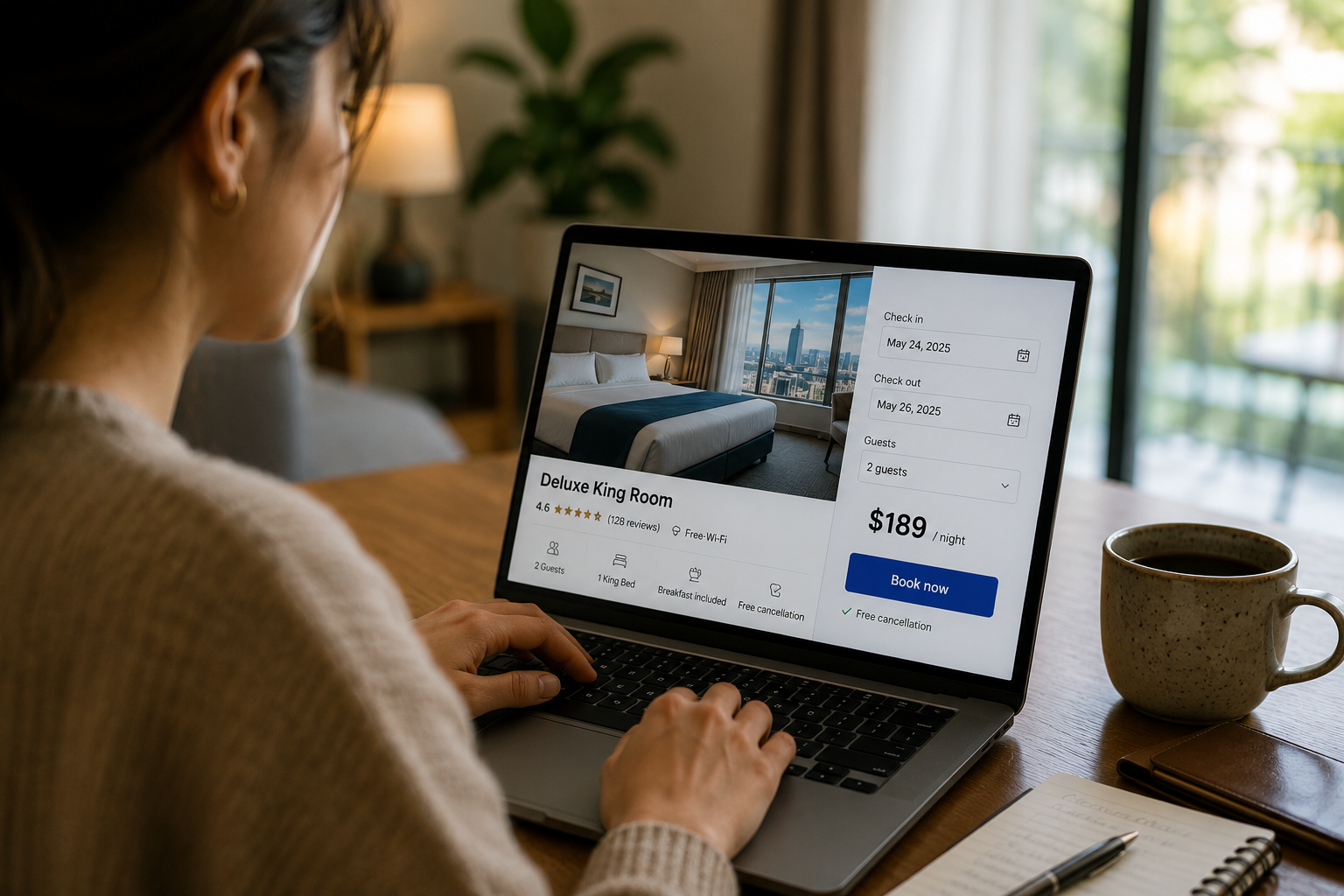
For years, booking windows have been gradually shrinking as travelers gained access to more inventory, more booking channels, and more ways to compare options in real time. Online travel agencies, mobile booking tools, and greater rate transparency have given travelers the confidence to wait longer before committing.
While this trend isn’t new, it continues to evolve. Today’s travelers are still researching extensively, but they’re waiting longer to book. Mobile devices have become the primary booking tool, last-minute demand plays a larger role in overall performance, and changing traveler preferences, economic uncertainty, and even climate concerns are influencing when and where people travel.
The Rise of the Shorter Booking Window
Recent industry data shows travelers are increasingly adopting a “wait-and-see” approach before making final booking decisions. According to research highlighted by PhocusWire, 43% of American consumers are willing to book unplanned trips with less than two months’ notice. Many travelers are also delaying final purchases until they find the right value or offer.
Booking.com observed similar trends, noting that domestic travelers often book significantly closer to their arrival than international travelers do. This creates opportunities for hotels to fill occupancy gaps through targeted, short-term promotions.
This doesn’t mean travelers are doing less research. In fact, PhocusWire also found that travelers view an average of 141 pages across 45 days before booking. What does this demonstrate? The path to purchase is often lengthy, even when the final booking occurs at the last minute.
The implication for hotels is clear: travelers may be considering your property for weeks before they finally book. Maintaining visibility throughout the research process is more important than ever.
When Shorter Booking Windows Create the Wrong Pricing Signals
One unintended consequence of shorter booking windows is the pressure they place on revenue teams. When occupancy is pacing behind expectations, it can be tempting to lower rates as arrival dates approach to stimulate demand. In some situations, that may be the right strategy. But when it becomes a consistent pattern, hotels risk training guests to wait.
Travelers quickly learn booking behaviors. If rates regularly drop in the final days before arrival, many guests will delay making a reservation because they’ve learned that waiting often yields a better deal.
This creates a cycle that can be difficult to break. Hotels lower rates because bookings appear soft. Guests respond by waiting longer to book. Booking windows compress even further, causing additional concern about pace and leading to more discounting. The result is often a lower average daily rate (ADR) without a meaningful increase in occupancy.
As booking windows continue to evolve, revenue managers need a deep understanding of their property’s historical booking pace and demand patterns. Rather than reacting solely to short-term occupancy concerns, teams should identify when demand is likely to materialize naturally and when intervention is truly needed.
In some cases, holding rates may be the best decision. In others, strong demand indicators may even justify rate increases closer to arrival. The goal is not simply to fill rooms. It’s to maximize revenue while avoiding pricing strategies that unintentionally encourage travelers to delay their booking decisions.
Mobile Has Become the Decision-Making Device
The compression of booking windows goes hand in hand with mobile-first behavior. Many travelers are discovering destinations, comparing rates, researching reviews, and ultimately booking from their phones. As booking decisions move closer to arrival, convenience becomes a major factor. Guests often search while commuting, during lunch breaks, or while traveling.
A slow mobile website, cumbersome booking engine, or confusing user experience can quickly send potential guests to a competitor.
Hotels should regularly review:
- Mobile booking conversion rates
- Booking engine performance on smartphones
- Page load speeds
- Mobile-specific offers and promotions
- Google Business Profile optimization
When booking decisions happen in minutes instead of weeks, every point of friction matters.
Drive Markets Are More Important Than Ever
Shorter booking windows often favor travelers who can make spontaneous decisions. That creates significant opportunities for drive markets. Domestic travelers typically book closer to arrival than international travelers, making regional audiences especially valuable for filling short-term occupancy needs.
Many hotels continue to focus heavily on broad geographic targeting while overlooking nearby feeder markets that can deliver last-minute demand.
Revenue and marketing teams should regularly evaluate:
- Top-performing drive markets
- Booking pace by geographic source
- Weekend versus weekday demand patterns
- Market-specific promotional opportunities
- Regional events that may influence travel behavior
When occupancy softens, geo-targeted campaigns focused on nearby travelers can often produce results much faster than broader awareness initiatives.
Real-Time Pricing Requires Real-Time Marketing
One of the biggest challenges facing hotels today is that revenue management and marketing often operate on different timelines. Revenue teams adjust rates daily, sometimes hourly. Marketing campaigns may still be planned weeks or months in advance. In a compressed booking environment, that disconnect becomes costly.
When demand suddenly softens, pricing adjustments alone may not be enough. Likewise, marketing campaigns promoting offers that no longer align with current demand conditions can reduce profitability. Successful hotels are increasingly treating revenue and marketing as a single commercial function.
That means:
- Sharing pacing reports regularly
- Reviewing pickup trends together
- Aligning promotional messaging with current demand
- Adjusting paid media budgets based on occupancy needs
- Activating campaigns quickly when booking windows compress
The hotels that can react fastest often capture demand before competitors even recognize the opportunity.
New Forces Are Reshaping Demand Patterns
Beyond shorter booking windows, traveler behavior itself continues to evolve.
Booking.com’s 2026 Travel & Sustainability Report found that 74% of travelers now consider extreme weather when choosing both where and when to travel. Additionally, 31% have canceled trips due to weather-related concerns, while 42% plan to travel outside traditional peak seasons.
These shifts are redefining seasonality. Markets that once experienced highly predictable demand peaks may see travelers shift to shoulder seasons or book closer to arrival as they monitor weather forecasts and travel conditions.
For example, while peak travel season has traditionally been concentrated in June to August, data shows a shift among travelers, with 42% planning to travel outside peak season and 25% seeking cooler destinations.
For hotel operators, forecasting demand is becoming less about historical patterns and more about monitoring real-time signals.
Why Marketing and Revenue Teams Must Work Together
The booking journey has become increasingly fragmented, non-linear, and unpredictable.
Travelers discover hotels through social media, research across multiple devices, compare rates repeatedly, and often wait until the final days or weeks before making a reservation. Brands must adapt to these fluid decision-making behaviors through more agile, data-driven approaches.
That level of agility is impossible when marketing and revenue teams operate independently. The strongest-performing hotels are creating closer alignment between the two disciplines by:
- Reviewing demand trends together
- Coordinating pricing and promotional strategies
- Sharing audience insights
- Responding quickly to pacing gaps
- Using real-time performance data to guide both advertising and pricing decisions
Revenue management can identify where demand is needed and determine whether pricing adjustments are truly warranted. Marketing can help generate demand without relying solely on discounts. Together, the two disciplines can protect rate integrity while still driving occupancy.
The Bottom Line
The booking window has changed again, and it’s unlikely to return to previous norms. Travelers are researching longer, booking later, relying more heavily on mobile devices, and making increasingly flexible travel decisions. Drive markets, last-minute demand, and dynamic pricing have become critical components of commercial success.
The hotels best positioned to thrive won’t simply react faster. They’ll create stronger connections between revenue management and marketing, allowing both teams to move in sync as traveler behavior continues to evolve.
In today’s environment, agility isn’t a competitive advantage. It’s becoming a requirement.